

Stewards of the Sound
Sustainability
Our Commitment
Better Than We Found It
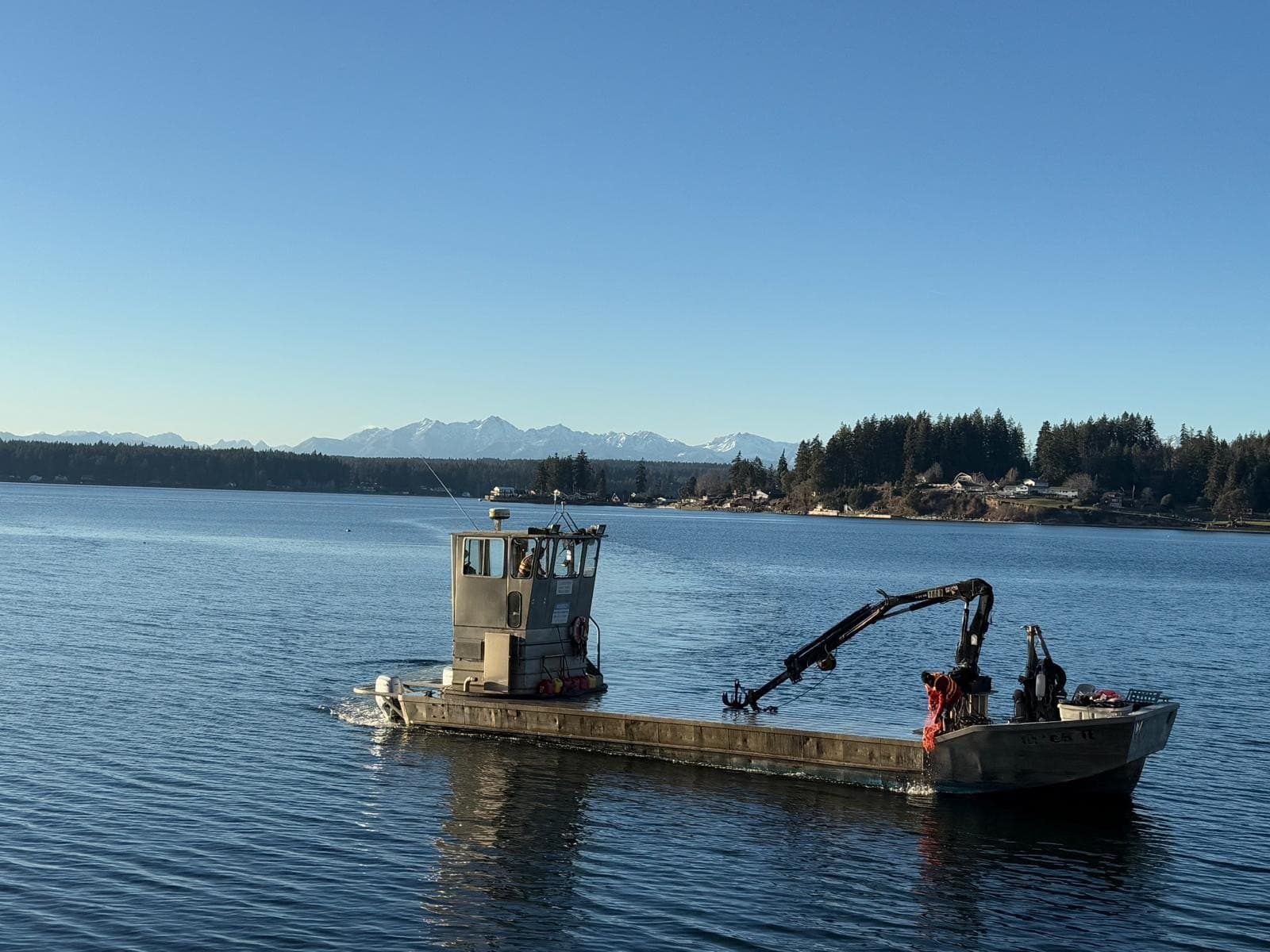
We believe we are stewards of our land and natural resources, focused on producing extraordinarily fresh, high-quality shellfish in an eco-friendly and sustainable manner. Over decades of farming these bays, we have innovated multiple planting, feeding, and harvesting methods that actively benefit the environment and ecosystem around us.
The Science
Why Shellfish Farming Is Good for the Ocean
Multiple scientific studies conclude that shellfish farming, done properly, is one of the most environmentally beneficial forms of food production on the planet — the foundation for truly regenerative aquaculture.
Improves water quality
Filter feeders remove excess nutrients, algae, and particles, reducing harmful algal blooms.
Creates marine habitat
Shellfish farms and reefs provide shelter and nursery areas for fish and crustaceans.
Requires few inputs
No feed, freshwater, or fertilizer — shellfish filter naturally occurring plankton.
Removes excess nutrients
Nitrogen incorporated into tissues and shells reduces coastal nutrient pollution.
Stores carbon
Shells contain calcium carbonate, providing a carbon-sequestration benefit over time.
Builds resilience
Shellfish beds stabilize coastlines and help restore degraded waterways.
In Practice
What We Do Differently
At Minterbrook, sustainability is not a marketing claim — it is built into every step of how we operate.
- Sustainably produced algae as feedstock for our nursery
- Refined planting techniques that minimize environmental disruption
- Every oyster harvested and sorted entirely by hand
- Oyster shells recycled for stormwater filtration (removing toxic metals), municipal and military filtration systems, and property beautification
- Upland properties intentionally left undeveloped to preserve natural forest and woodland
Together
For the Next Generation
Working alongside our team, our community, and our partners, we strive to provide a high-quality seafood protein source while consciously minimizing our environmental footprint — leaving these bays healthier for the next generation than we found them.